
"Let not your heart be troubled: ye believe in God, believe also in me. In my Father's house are many mansions: if it were not so, I would have told you. I go to prepare a place for you. And if I go and prepare a place for you, I will come again, and receive you unto myself; that where I am, there ye may be also." (John 14:1–3 KJV)
Songs have been written about it. Preachers have built entire eschatologies around it. The grieving have clung to it as assurance that their loved ones are now safely settled in a heavenly room prepared just for them. The image has been set to music and passed down for generations. Ira Stanphill gave it melody in 1949: "I've got a mansion just over the hilltop, in that bright land where we'll never grow old; and someday yonder we will never more wander, but walk on streets that are purest gold." Before him, S. Fillmore Bennett's 1868 hymn "In the Sweet By and By" promised "a land that is fairer than day" where "the Father waits over the way to prepare us a dwelling place there" — lifting the language of John 14:2 directly into a chorus sung by millions. Albert Brumley's beloved "I'll Fly Away" sends the believer homeward "to a home on God's celestial shore." And countless revival sermons have built their altar-call crescendo on the same image: your name is on a door, your room is ready, your mansion is waiting.
The image is beautiful. It has comforted the grieving and motivated the weary. That is not in dispute.
There is just one problem. The Lord Jesus was not speaking to you. He was not speaking to the Body of Christ. He was not describing the hope given to members of the church in the present dispensation of grace. And the "place" He was preparing, the "house" He was describing, and the "coming again" He was promising are all part of a prophetic program for Israel that is entirely distinct from what Paul later revealed as the mystery of Christ.
This is not a minor theological quibble. Misapplying John 14 to the Body of Christ confuses two separate programs, assigns promises to one group that belong to another, and ultimately obscures the genuinely glorious heavenly hope that Paul actually revealed for believers today. As long as members of the Body of Christ are picturing themselves in a mansion on a street of gold, waiting for Jesus to return and escort them to their personal suite, they are living in someone else's inheritance and missing the astonishing reality of their own.
Let us be workmen who rightly divide the word of truth.
Who Is Jesus Talking To in John 14?
The first and most foundational question is one that the tradition-trained mind rarely stops to ask: Who is Jesus actually speaking to here?
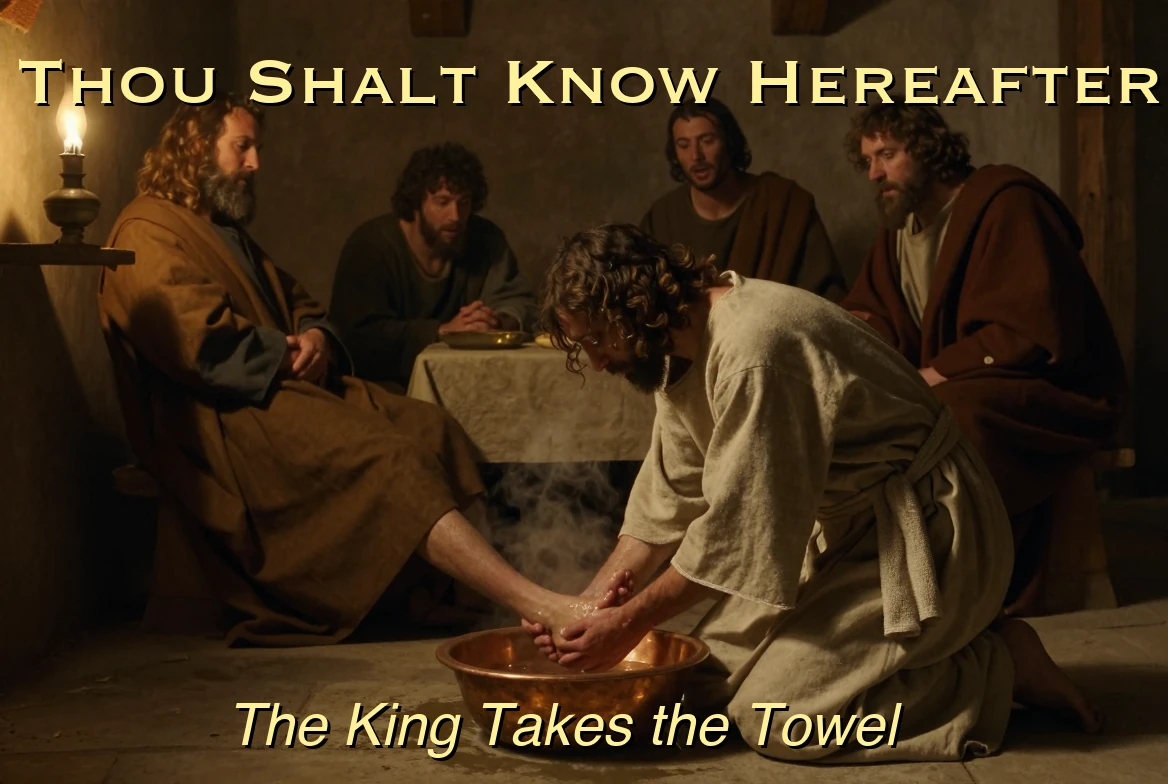
John 14 is part of what is called the Upper Room Discourse — the lengthy address Jesus gave to His disciples on the night of His betrayal, running from John 13 through John 17. To understand who is being addressed, we have to look at the context of John 13:
"Now before the feast of the passover, when Jesus knew that his hour was come that he should depart out of this world unto the Father, having loved his own which were in the world, he loved them unto the end." (John 13:1 KJV)
"His own" — this is a specific group. These are the twelve disciples, the men who had been with Jesus throughout His earthly ministry, called by Him from among Israel to be the foundation of Israel's coming kingdom program. By the time John 14:1 is spoken, Judas Iscariot had already departed (John 13:30), so the audience is the eleven remaining disciples — all Jewish men, all part of Israel's program, all operating under the Kingdom gospel that Jesus had been preaching throughout His ministry.
These are the men to whom Jesus said: "Ye are they which have continued with me in my temptations; And I appoint unto you a kingdom, as my Father hath appointed unto me; That ye may eat and drink at my table in my kingdom, and sit on thrones judging the twelve tribes of Israel." (Luke 22:28–30 KJV)
These are the men for whom Jesus prayed: "I have manifested thy name unto the men which thou gavest me out of the world: thine they were, and thou gavest them me." (John 17:6 KJV)
These are the men who asked Jesus on the Mount of Olives just before His ascension: "Lord, wilt thou at this time restore again the kingdom to Israel?" (Acts 1:6 KJV) — and whom Jesus did not rebuke for that expectation.
The Upper Room Discourse is a Kingdom address to Kingdom disciples. It is not Paul's epistles. It does not contain mystery doctrine. The revelation of the mystery — the body of truth that governs the present dispensation — was "kept secret since the world began" (Romans 16:25) and was first revealed to Paul after the Lord appeared to him on the Damascus road. You cannot find the mystery in John 14, because at the time Jesus spoke those words, it had not yet been revealed to anyone.
This is not saying John 14 is uninspired or unprofitable. All scripture is given by inspiration of God and is profitable (2 Timothy 3:16). But profitable does not mean addressed to us. Paul was explicit: "Study to shew thyself approved unto God, a workman that needeth not to be ashamed, rightly dividing the word of truth." (2 Timothy 2:15 KJV) Right division is not optional. It is the key that unlocks the Bible and assigns each promise, command, and covenant to its proper recipient.
"My Father's House": What Does the Phrase Mean?
Once we understand that Jesus is speaking to Jewish disciples in a Kingdom context, the next question is: what did "my Father's house" mean to a first-century Jewish mind?
The phrase is not alien to the Gospel of John. Jesus used it once before, and that usage is enormously instructive. When He drove the money changers from the temple courts in John 2, He said:
"And said unto them that sold doves, Take these things hence; make not my Father's house an house of merchandise." (John 2:16 KJV)
My Father's house. There it is — the temple in Jerusalem. For a Jew in the first century, the Father's house was the dwelling place of God among His people: the tabernacle in the wilderness, the temple of Solomon, the rebuilt temple of their own day. The Father's house was the place where God's name dwelt, the center of Israel's covenant worship, the focal point of the nation's hope.
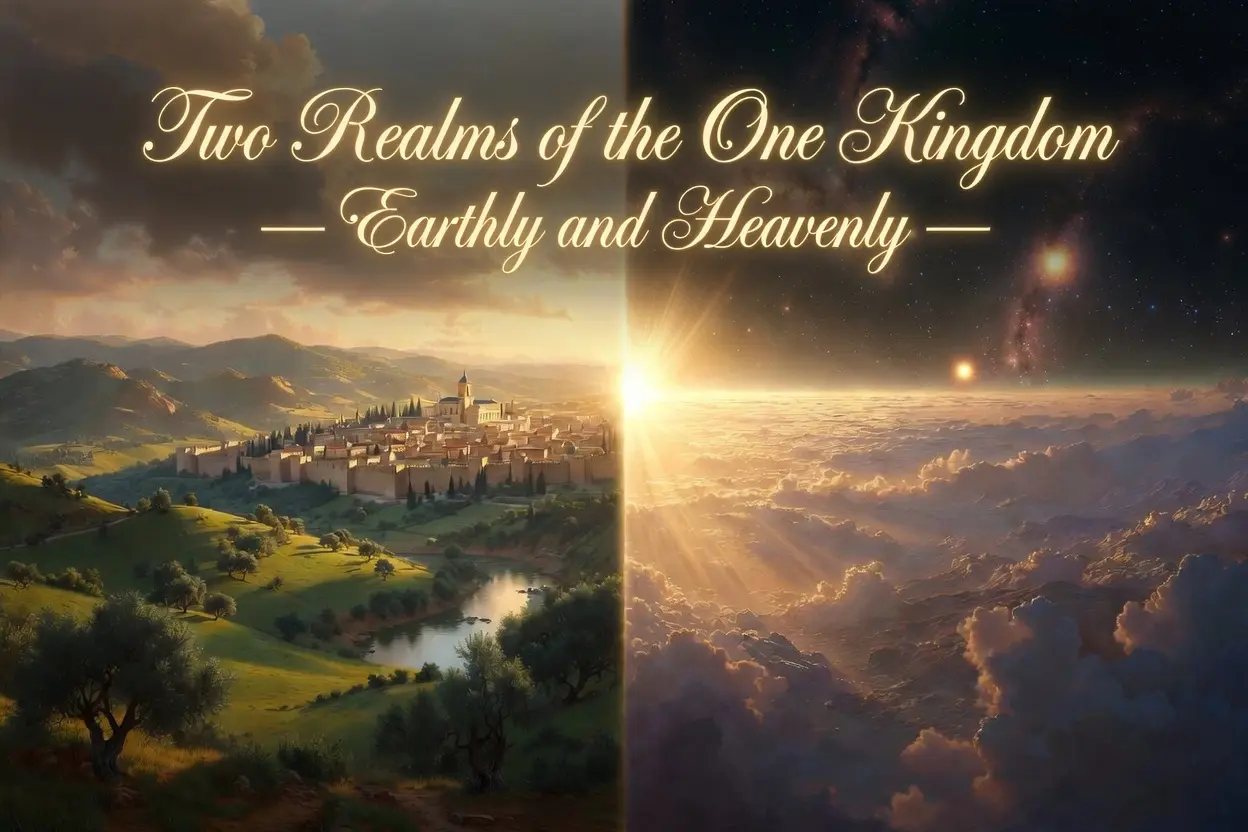
Now Jesus says in John 14:2, "In my Father's house are many mansions." He is not suddenly speaking of a personal celestial estate in some far corner of the universe. He is speaking in the idiom of His audience. And for His audience, the Father's house pointed forward to the great prophetic hope of Israel: the ultimate dwelling of God with His people in the age to come — the heavenly Jerusalem, the city whose builder and maker is God (Hebrews 11:10), the place to which the Lord would return and which would be established as the center of the restored Kingdom.
The disciples were not thinking of individual sky-condominiums. They were thinking of the fulfillment of everything the prophets had spoken — God dwelling with His people in a restored and glorified Israel, the Messiah reigning from His throne, the nations coming to Jerusalem, the tabernacle of God pitched among men. This is the frame of reference Jesus was operating within. To read "my Father's house" as a metaphor for a private room in a celestial hotel is to impose a twentieth-century evangelical imagination onto a first-century Jewish conversation.
"Mansions": The Word the Text Itself Defines
Before leaving John 14:2, it is worth letting the chapter define its own term — not by going outside the Bible, but by reading a few verses further. In verse 23 of that same chapter, Jesus uses the same word again:
"Jesus answered and said unto him, If a man love me, he will keep my words: and my Father will love him, and we will come unto him, and make our abode with him." (John 14:23 KJV)
"Make our abode with him." The same word behind "mansions" in verse 2 is the same word behind "abode" in verse 23. If "mansions" means a grand personal estate, then what does "abode" mean in verse 23 — is the Father moving into a personal mansion inside each individual believer? Of course not. The two uses together simply confirm that the word means a dwelling place, a place of abiding. Jesus was telling His disciples that in the Father's house there are many such places — abundant room, a prepared place — for each of them. That is the promise. Not a personal estate in the sky for church-age believers, but a prepared dwelling in the house of God for the Jewish disciples to whom it was spoken.
"I Will Come Again": The Second Advent, Not the Rapture
This brings us to what is perhaps the most critical point of misapplication. Jesus says in verse 3: "And if I go and prepare a place for you, I will come again, and receive you unto myself; that where I am, there ye may be also."
This is almost universally cited as a description of the Rapture of the Body of Christ. It is not. The Rapture is a mystery — information that was "kept secret since the world began" (Romans 16:25) and revealed specifically to Paul. You cannot find the mystery of the Rapture in John 14 because the mystery had not yet been revealed. The disciples hearing John 14 had no concept of a secret catching away of a heavenly Body of believers. That truth was not yet on the table.
What the disciples did understand — and what Jesus was speaking directly into — was the Second Advent: the promised return of the Messiah to earth to establish His Kingdom, gather His people, judge the nations, and reign from Jerusalem. This is what the prophets had spoken since the world began. This is what Israel was waiting for. This is what "I will come again" meant to the men hearing it.
The Rapture, as Paul later revealed it, is a dramatically different event:
"For the Lord himself shall descend from heaven with a shout, with the voice of the archangel, and with the trump of God: and the dead in Christ shall rise first: Then we which are alive and remain shall be caught up together with them in the clouds, to meet the Lord in the air: and so shall we ever be with the Lord." (1 Thessalonians 4:16–17 KJV)
"Behold, I shew you a mystery; We shall not all sleep, but we shall all be changed, In a moment, in the twinkling of an eye, at the last trump: for the trumpet shall sound, and the dead shall be raised incorruptible, and we shall be changed." (1 Corinthians 15:51–52 KJV)
Paul calls it a mystery — and mysteries are things kept secret, not things announced. If the Rapture were being described in John 14, it would not be a secret. It would have been a prophecy spoken in anticipation. But Paul says explicitly that the Rapture is a mystery he is revealing — something not previously known. John 14 cannot be describing what Paul is calling a previously hidden secret.
The Second Advent, by contrast, is everywhere in prophecy. The prophets spoke of it repeatedly. The disciples expected it. The angels promised it at the Ascension: "This same Jesus, which is taken up from you into heaven, shall so come in like manner as ye have seen him go into heaven." (Acts 1:11 KJV) "I will come again" is prophetic, not mystery. It is the Second Advent promise to Israel's remnant, not the mystery Rapture promise to the Body of Christ.
The New Jerusalem: Coming Down, Not Up
When we trace the destination that Jesus points to — the Father's house, the prepared place — forward into Scripture, we arrive at one of the most dramatically misunderstood passages in the entire Bible. Revelation 21:
"And I saw a new heaven and a new earth: for the first heaven and the first earth were passed away; and there was no more sea. And I John saw the holy city, new Jerusalem, coming down from God out of heaven, prepared as a bride adorned for her husband. And I heard a great voice out of heaven saying, Behold, the tabernacle of God is with men, and he will dwell with them, and they shall be his people, and God himself shall be with them, and be their God." (Revelation 21:1–3 KJV)
Notice the direction of travel. The New Jerusalem does not wait in the sky for redeemed souls to ascend to it. It comes down. Down from God out of heaven. Down to the new earth. The dwelling of God moves toward His people, not the other way around. The grand announcement — "the tabernacle of God is with men" — is a declaration that God's presence, long symbolized by the tabernacle and temple, has now come permanently and fully to dwell among His earthly people.
This is the fulfillment of what Jesus called the Father's house. This is the prepared place. And it is coming to earth — a renewed, glorified earth — not floating in some disembodied celestial realm.
Now look at who inhabits this city. Revelation 21:12 tells us the New Jerusalem has twelve gates, and "at the gates twelve angels, and names written thereon, which are the names of the twelve tribes of the children of Israel." (Revelation 21:12) The twelve tribes. Not the Body of Christ, in which there is neither Jew nor Greek (Galatians 3:28; Colossians 3:11). Twelve tribes — Israel's prophetic program.
Revelation 21:14 continues: "And the wall of the city had twelve foundations, and in them the names of the twelve apostles of the Lamb." (Revelation 21:14) The twelve apostles of the Lamb — the twelve Jesus appointed to judge the twelve tribes of Israel (Matthew 19:28; Luke 22:30). These are the men Jesus was speaking to in John 14. The New Jerusalem is their city, their inheritance, their prepared place. The foundations of that city bear their names, not Paul's name.
Paul himself explicitly distinguished the Body of Christ's hope from an earthly city. The Body's hope is heavenly — not a city coming down to earth, but a position already secured in the heavens:
"For our conversation is in heaven; from whence also we look for the Saviour, the Lord Jesus Christ: Who shall change our vile body, that it may be fashioned like unto his glorious body, according to the working whereby he is able even to subdue all things unto himself." (Philippians 3:20–21 KJV)
Our conversation — our citizenship, our manner of life, our commonwealth — is already in heaven. Not someday. Not when we move into our mansion. Now. By position, the believer in the Body of Christ is already seated in heavenly places in Christ Jesus (Ephesians 2:6). That is a present reality, not a future address.
The Body of Christ's Actual Hope
So if John 14's prepared place and the New Jerusalem belong to Israel's prophetic program, what is the actual hope of the Body of Christ? Paul answers this question with extraordinary richness across his epistles, and what he describes is not a lesser hope — it is a higher one.
We are already seated in heavenly places. The position of the Body of Christ is not waiting to be assigned — it has already been granted:
"And hath raised us up together, and made us sit together in heavenly places in Christ Jesus." (Ephesians 2:6 KJV)
"Blessed be the God and Father of our Lord Jesus Christ, who hath blessed us with all spiritual blessings in heavenly places in Christ." (Ephesians 1:3 KJV)
Not earthly blessings. Not a mansion on a street of gold. All spiritual blessings in heavenly places in Christ. This is a positional reality — already accomplished, already secured, already ours by virtue of being in Christ.
Our hope is Christ Himself, laid up in heaven. Paul writes to the Colossians:
"For the hope which is laid up for you in heaven, whereof ye heard before in the word of the truth of the gospel." (Colossians 1:5 KJV)
"To whom God would make known what is the riches of the glory of this mystery among the Gentiles; which is Christ in you, the hope of glory." (Colossians 1:27 KJV)
Christ in you — not a room prepared for you somewhere else. The hope of glory is not a geographical destination. It is a person. "Paul, an apostle of Jesus Christ by the commandment of God our Saviour, and Lord Jesus Christ, which is our hope." (1 Timothy 1:1 KJV) Our hope is the Lord Jesus Christ Himself.
We have a building from God not made with hands. Paul does speak of a future dwelling for the Body of Christ, but it bears no resemblance to a mansion in an earthly city:
"For we know that if our earthly house of this tabernacle were dissolved, we have a building of God, an house not made with hands, eternal in the heavens." (2 Corinthians 5:1 KJV)
Not a mansion in a city. A building of God, not made with human hands, eternal in the heavens. The contrast Paul is drawing is between our present mortal body (the earthly house, the tabernacle) and our glorified resurrection body (the building from God). Our eternal dwelling is not a room in a city — it is the glorified body Christ will give us at His coming.
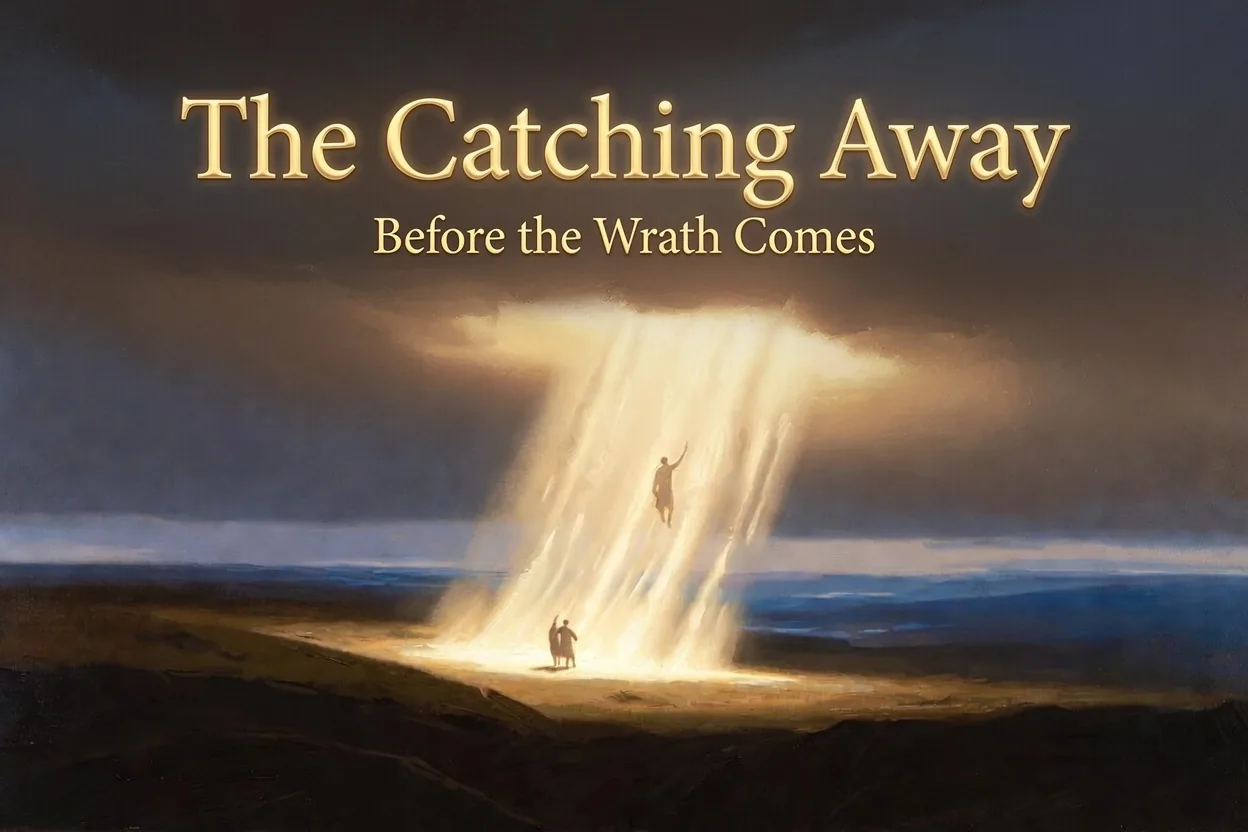
The Rapture: caught up to meet the Lord in the air. Paul revealed the mystery of the gathering of the Body of Christ, and it looks nothing like Jesus receiving the disciples at the Second Advent in John 14:3:
"For the Lord himself shall descend from heaven with a shout, with the voice of the archangel, and with the trump of God: and the dead in Christ shall rise first: Then we which are alive and remain shall be caught up together with them in the clouds, to meet the Lord in the air: and so shall we ever be with the Lord." (1 Thessalonians 4:16–17 KJV)
Caught up. In the air. Not received into a prepared room in a city coming down to earth. The Body of Christ is caught up to meet the Lord where He is — in the air, the heavenly realm. This is consistent with our heavenly calling and heavenly citizenship. We are a heavenly people meeting a heavenly Lord in the heavenly realm.
Glorification — conformed to His image. The ultimate hope Paul describes is not a change of address but a change of nature:
"For our conversation is in heaven; from whence also we look for the Saviour, the Lord Jesus Christ: Who shall change our vile body, that it may be fashioned like unto his glorious body." (Philippians 3:20–21 KJV)
"For whom he did foreknow, he also did predestinate to be conformed to the image of his Son." (Romans 8:29 KJV)
We will be conformed to the image of the Son of God. We will bear the image of the heavenly. We will have a body fashioned like Christ's glorious resurrection body. That is the Body of Christ's inheritance — not square footage in a celestial building, but sharing in the glory of the risen Lord Himself.
Why Israel's Disciples Were Promised a Prepared Place
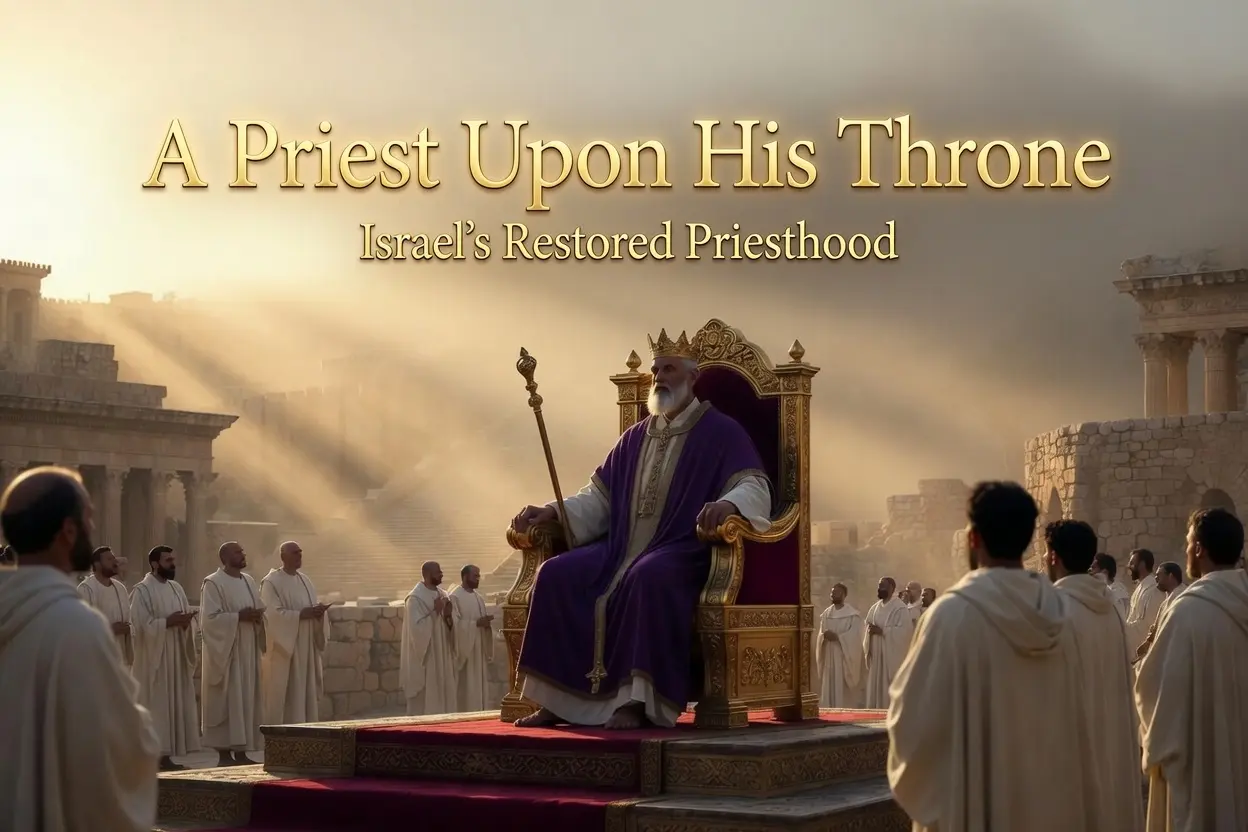
To be clear: the promise Jesus made to His disciples in John 14 is genuine, sure, and glorious. It belongs to them. The twelve apostles of the Lamb whose names are written on the foundations of the New Jerusalem will dwell in that city. The scattered little flock of Israel — those who received Jesus as Messiah and endured to the end — will have their place in the restored Kingdom, in the Father's house, in the New Jerusalem that comes down to the renewed earth. Their hope is real and it will be fully realized.
Israel's prophetic hope is an earthly one — not in the diminished sense of something lesser, but in the literal sense of a restored and glorified earth with God dwelling among His people in the New Jerusalem. The tabernacle of God with men. The twelve tribes named on twelve gates. The nations walking in the light of the city. The tree of life for the healing of the nations. This is the Father's house prepared for those to whom Jesus made that promise — His Jewish disciples under the Kingdom program, the remnant of Israel.
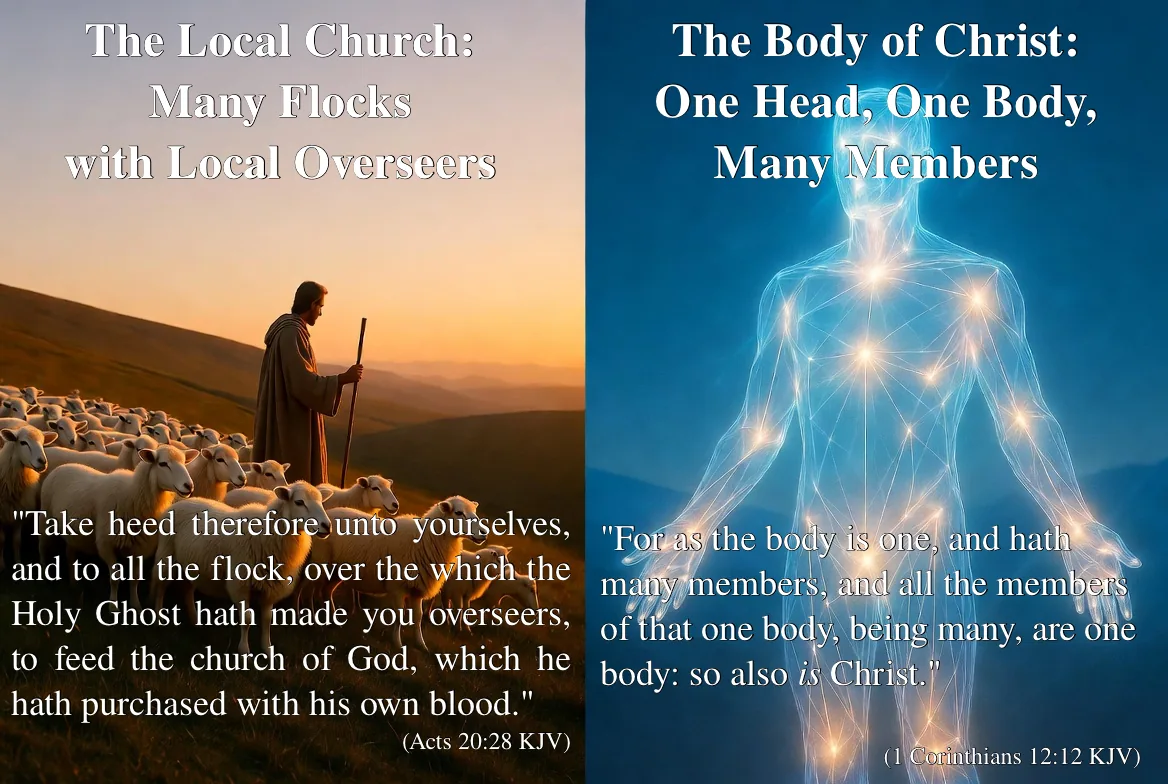
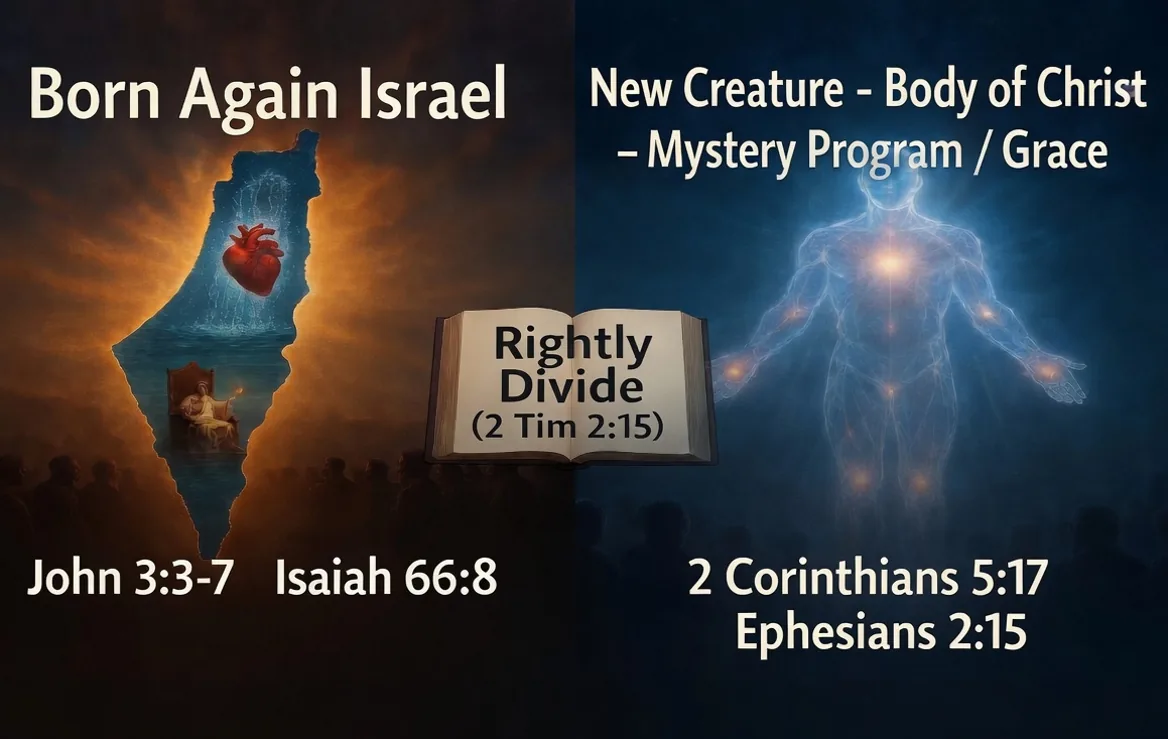
The Body of Christ, by contrast, has a heavenly calling — not earthly, not kingdom, not New Jerusalem. We are blessed with all spiritual blessings in heavenly places. Our citizenship is in heaven. We are raised up and seated in heavenly places in Christ Jesus. The hope laid up for us is in heaven. We are looking for the Savior from heaven. Everything about the Body of Christ's hope points upward and inward — into Christ, into the heavenly places, into a present positional reality that has no parallel anywhere in Israel's program.
The Confusion and Its Cost
The tradition of applying John 14 to church-age believers is so deeply embedded that questioning it feels almost impious. Countless believers have found genuine comfort in the thought of a mansion waiting for them in heaven. The hymns have been sung at thousands of funerals. The language of John 14 has been part of Christian funeral culture for generations, and it would be unkind to pretend there is no beauty in the imagery.
But comfort drawn from a misapplied text is not the same as standing in the truth that belongs to you. And the cost of the confusion is real.
When members of the Body of Christ borrow their hope from Israel's prophetic program, they inevitably end up with a diminished understanding of what Paul actually revealed. They picture themselves as glorified tourists in someone else's city rather than understanding that they are already seated in heavenly places in Christ, already complete in Him (Colossians 2:10), already possessing every spiritual blessing the Father has to give. They are living on a borrowed postcard of the New Jerusalem when Paul has given them a deed to the heavenly places.
Furthermore, the misapplication of John 14 feeds the broader confusion that runs through most of Christendom: the failure to distinguish between Israel's earthly, prophetic program and the Body of Christ's heavenly, mystery program. When the same passage of John 14 is preached to both programs indiscriminately, right division collapses entirely. Peter's little flock and Paul's Body of Christ get merged into a single undifferentiated "Church," and the distinctive riches of each program are lost.
Paul warned the Corinthians about exactly this kind of confusion when he rebuked them for their earthly-minded factionalism:
"Now this I say, that every one of you saith, I am of Paul; and I of Apollos; and I of Cephas; and I of Christ. Is Christ divided?" (1 Corinthians 1:12–13 KJV)
And he insisted on the distinctiveness of his own gospel:
"But I certify you, brethren, that the gospel which was preached of me is not after man. For I neither received it of man, neither was I taught it, but by the revelation of Jesus Christ." (Galatians 1:11–12 KJV)
Paul received his gospel by revelation — meaning it was not derived from what Jesus taught the twelve disciples, and it was not continuous with the Kingdom program. It was a separate, new, previously hidden revelation. To pour John 14 into that revelation is to undo everything Paul labored to keep distinct.
What We Are Actually Promised
Let the record stand clear. The Body of Christ is not promised:
- A mansion in the New Jerusalem
- A room in the Father's house spoken of in John 14
- Reception at the Second Advent described in John 14:3
- Dwelling in the earthly city described in Revelation 21
The Body of Christ is promised:
- Every spiritual blessing in heavenly places in Christ (Ephesians 1:3)
- A present seated position in heavenly places in Christ Jesus (Ephesians 2:6)
- A hope laid up in heaven — Christ Himself (Colossians 1:5, 27; 1 Timothy 1:1)
- A building of God, not made with hands, eternal in the heavens — the glorified body (2 Corinthians 5:1)
- Being caught up together to meet the Lord in the air (1 Thessalonians 4:17)
- A body fashioned like unto His glorious body (Philippians 3:21)
- Conformity to the image of His Son (Romans 8:29)
- Being presented holy and unblameable and unreproveable in His sight (Colossians 1:22)
- Manifestation with Christ in glory (Colossians 3:4)
These are not lesser promises than a mansion. They are infinitely greater. To be seated in heavenly places in Christ surpasses any earthly dwelling. To be conformed to the image of the Son of God exceeds any architectural marvel. To possess all spiritual blessings in the heavenly realm is an inheritance that makes a room in a city look like a cottage.
The Body of Christ has been given the unsearchable riches of Christ (Ephesians 3:8). Paul was charged to make all men see the fellowship of the mystery — something hidden since the world began, something the prophets never saw coming, something entirely distinct from what Jesus promised to His Jewish disciples in John 14.
Do not trade that inheritance for someone else's mansion.
Conclusion: The Hope That Belongs to You
The promise of John 14 is real. The Father's house is real. The prepared place is real. The mansions are real. The Second Advent is real. The New Jerusalem coming down from God out of heaven is real. Every word of it will be fulfilled — for the people to whom it was spoken, in the program for which it was intended.
But that program is not yours. You are a member of the Body of Christ, a new creature in whom there is neither Jew nor Greek, called with a heavenly calling, blessed with all spiritual blessings in heavenly places, complete in Christ, seated with Him far above all principality and power. You are not waiting to move into the New Jerusalem. You are already seated in the heavenly places it points toward.
The hope that belongs to you is not a room prepared in an earthly city. It is the Lord Jesus Christ Himself — in you, the hope of glory. It is a body fashioned like His glorious resurrection body. It is being caught up to meet Him in the air at His appearing. It is the day when you will be manifested with Him in glory, conformed to His image, presented holy and unblameable before the Father.
That is your inheritance. Study it. Stand in it. Rejoice in it. And rightly divide the word of truth well enough to leave Israel's mansion where it belongs — in a kingdom program whose Author will faithfully deliver everything He promised, to the people He promised it to.
"Blessed be the God and Father of our Lord Jesus Christ, who hath blessed us with all spiritual blessings in heavenly places in Christ." (Ephesians 1:3 KJV)
You have been blessed. Right now. In heavenly places. In Christ. That is not a promise of a future mansion. That is a present, positional, unassailable reality. Rest in it.
© 2026 Edward R. Cross




Comments
No comments yet. Be the first to share your thoughts.
Leave a comment